10 % discount for your newsletter registration! Moreover: Discover the new Spring & Easter collections 2026!

Hutschenreuther company history: tradition and innovation since 1814

The history of Hutschenreuther is not only a story about porcelain, but also about the legacy of craftsmanship. It demonstrates a passion for attention to detail and tells of the tireless vision to enrich the beauty of life with exquisite porcelain pieces. Since its founding in 1814, Hutschenreuther has developed into one of the most renowned German porcelain brands. With a deep-rooted heritage in the Bavarian porcelain industry, the Hutschenreuther brand has inspired generations of porcelain lovers. Learn more about the fascinating history and values that continue to shape Hutschenreuther today.

The beginning: Carl Magnus Hutschenreuther and the founding of the first porcelain factory

Driven by his passion for porcelain, the young porcelain painter Carl Magnus from Thuringia set out at the beginning of the 19th century in search of ‘white gold’, which he finally found while visiting relatives in north-eastern Bavaria. During his visit, he met his future wife, the daughter of the head forester Reuss. The two young lovers met secretly near the village of Steinberg. While waiting for his beloved to arrive, the young Hutschenreuther discovered kaolin, which is used in the manufacture of porcelain.

Despite numerous setbacks and the initial rejection of his licence application by the royal authorities, Carl Magnus Hutschenreuther did not lose heart. For him, ‘white gold’ – porcelain – was not just a treasure for kings and princes, but something he wanted to bring to the world. After eight years of tireless struggle, his perseverance was rewarded: in 1822, he received approval for the first private porcelain manufactory in Bavaria.

Portrait of Carl Magnus Hutschenreuther.

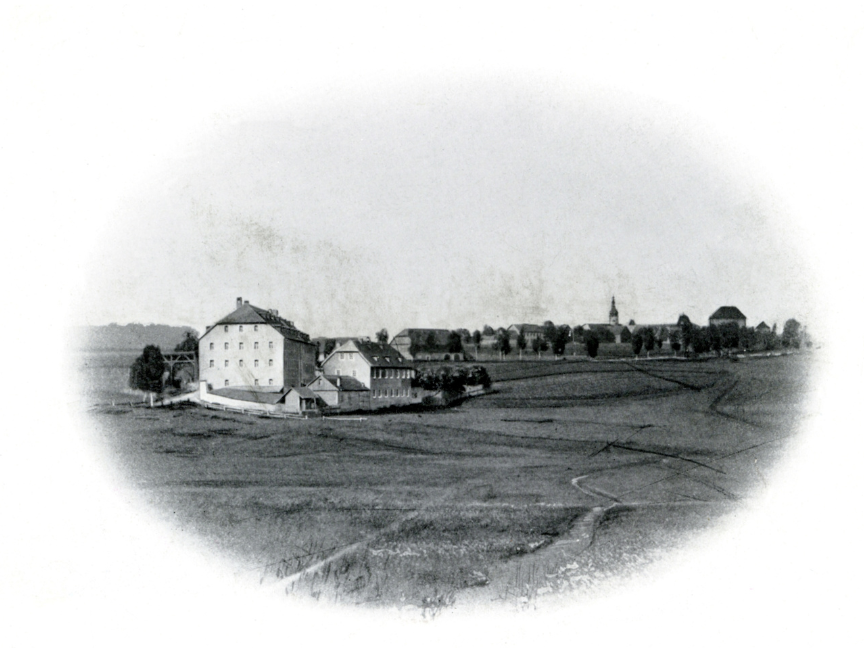
With the discovery of kaolin – the ‘white gold’ – and his passion for the finest porcelain, Carl Magnus Hutschenreuther laid the foundation for the porcelain industry in Bavaria in Hohenberg. His vision was to create porcelain of unparalleled quality and aesthetics that would gain worldwide recognition. Carl Magnus Hutschenreuther died at a very young age, and his sons continued to run the company in Hohenberg together with their mother. Hutschenreuther's company history, which began on a small scale, quickly became synonymous with craftsmanship excellence and a sense of tradition, captured in timeless porcelain.

The rise to global brand status: Lorenz Hutschenreuther and the beginnings of Selb as a porcelain town

Carl Magnus' son, Lorenz Hutschenreuther, continued his father's legacy and founded a second porcelain factory in Selb in 1857. This marked the beginning of Selb's reputation as the ‘porcelain city’, which remains known to this day as the heart of German porcelain production. Lorenz introduced innovative manufacturing techniques and focused on sophisticated designs, which catapulted Hutschenreuther into the international elite of porcelain manufacturers.

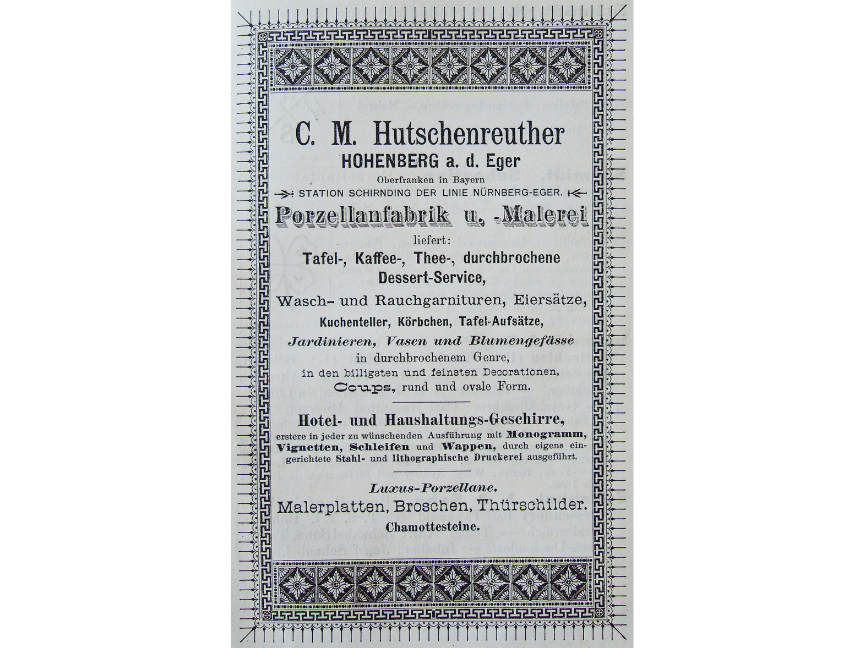
The two companies, the original one in Hohenberg and Lorenz Hutschenreuther's porcelain factory founded in Selb, developed in parallel and grew into independent corporations. While the Hohenberg factory focused on traditional hand painting, deep-engraved edges (meaning that the edges of the porcelain were engraved deep into the material by mechanical processing to create a precise and detailed pattern) and classic shapes, Lorenz excelled with exquisite decorations and innovative designs. His creations were in no way inferior to his father's work.

With his magnificent porcelain services, he won three gold medals at the World Exhibition for Glass and Porcelain – an award that impressively underlines the excellence and artistic standards of the brand. This brought Lorenz Hutschenreuther international recognition.

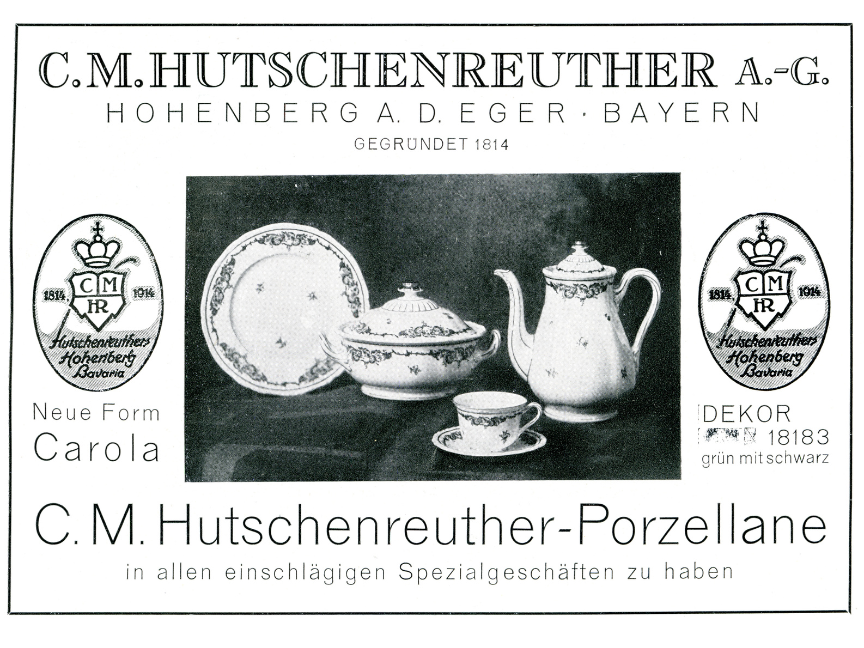
Historic display of Hutschenreuther porcelain in the C.M. Hutschenreuther manufactory.

Reconstruction and merger: Hutschenreuther after the Second World War

His father's porcelain factory in Hohenberg suffered enormous losses during the Second World War, as it lost all its businesses due to the new borders, including factories in Silesia, Bohemia and Thuringia. The main site in Hohenberg now only had a small factory in Arzberg. Lorenz Hutschenreuther, on the other hand, was able to maintain his connection to his factories in Selb and thus became the stronger force in the family business.

In 1969/70, the two parts of the company merged. This union marked the beginning of a new era that paved the way for the growth of the brand. Hutschenreuther always remained true to its motto ‘People and Porcelain’ and supported its employees with training courses, cultural initiatives and sports projects.

The lion's trademark: a symbol of quality and craftsmanship

Since 1919, the lion has adorned every piece of Hutschenreuther porcelain as an unmistakable trademark. It stands for strength, consistency and the pursuit of perfection. The lion is a symbol of the excellent craftsmanship that continues to characterise all Hutschenreuther products to this day – whether fine porcelain tableware or artistically crafted porcelain figurines. The iconic symbol adorns the underside of every piece of porcelain and is a guarantee of quality and tradition.

Hutschenreuther logo with lion and founding year 1814.

Merger with Rosenthal: Two strong brands united

In 2000, Hutschenreuther became part of the renowned Rosenthal GmbH, merging two traditional porcelain brands. This merger enabled Hutschenreuther to further increase its innovative strength and conquer new markets, while preserving its roots and values. Today, under the umbrella of Rosenthal, Hutschenreuther stands for the combination of classic elegance with traditional porcelain design and remains an indispensable part of the international porcelain landscape.

Logo of the porcelain brand Rosenthal.

Hutschenreuther today: tradition meets modern aesthetics

Hutschenreuther remains a brand that preserves its traditions while also setting modern trends. With popular collections such as Hutschenreuther Blue Onion Pattern and Maria Theresia, as well as the annual Christmas bell from the popular Hutschenreuther Christmas collections, Hutschenreuther remains an integral part of many households worldwide. At Hutschenreuther, the art of porcelain manufacturing continues to lie in the attention to detail.

Every piece of porcelain from Hutschenreuther – whether fine porcelain tableware, elegant vases or festive Christmas decorations – carries the history of the company within it, like a silent narrator that brings to life the tradition, artistry and dedication with which each piece of porcelain was created.

OOPS! The browser you are using is no longer supported.

Browse Rosenthal.com using the latest version of Microsoft Edge, Chrome, Mozilla Firefox or Safari and prepare to dive into an extraordinary beauty experience.